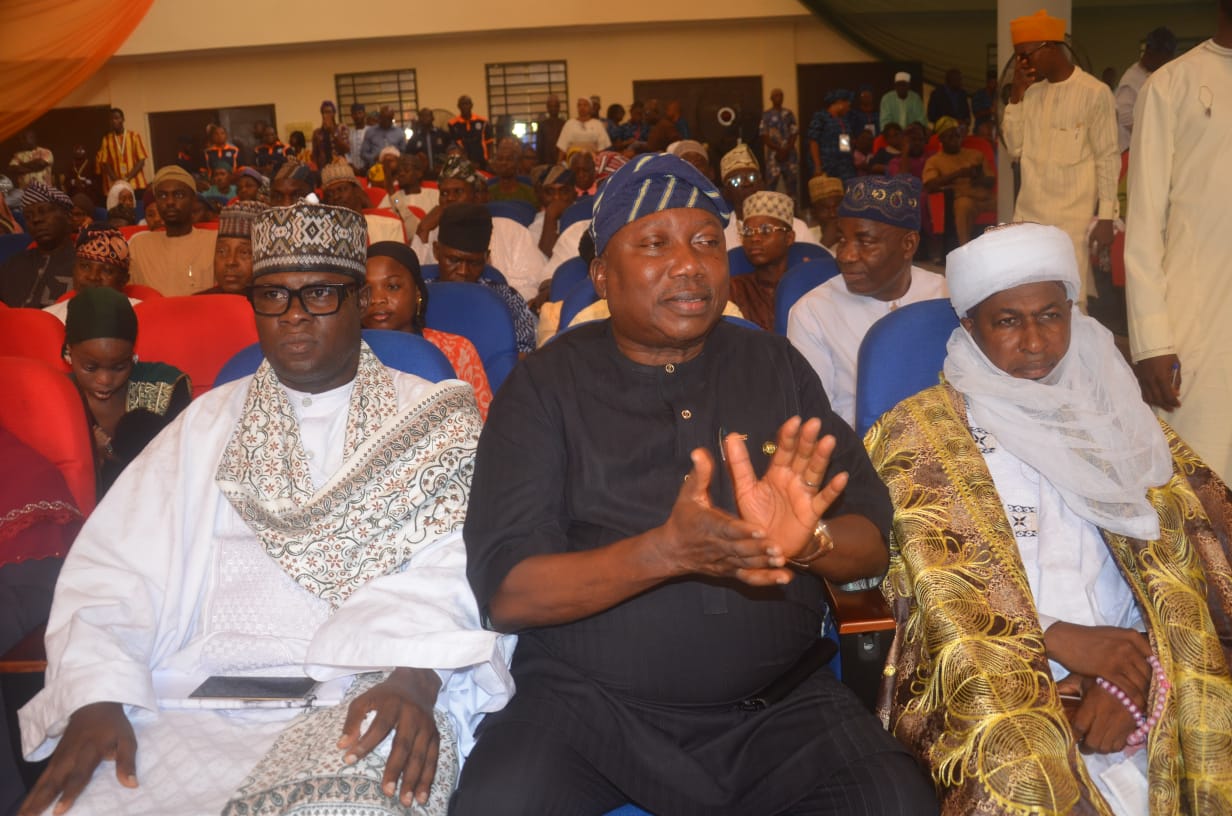
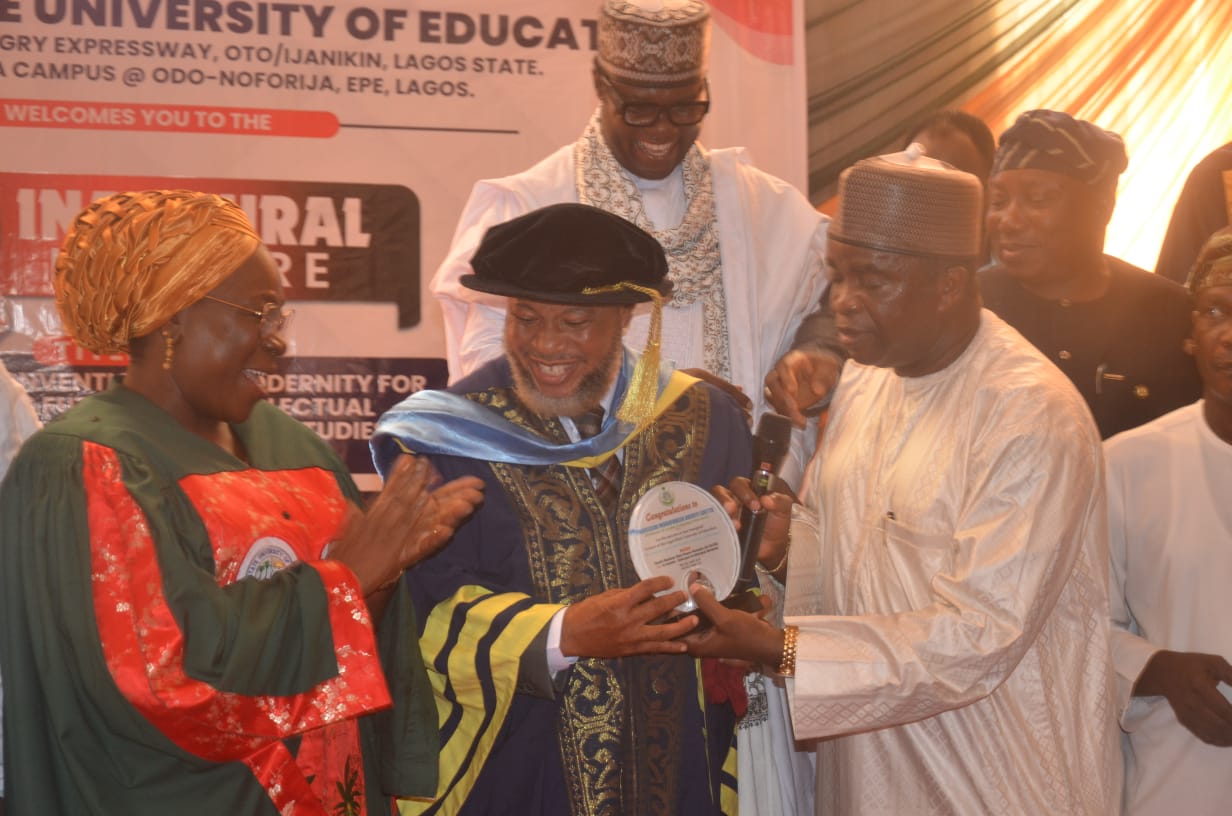
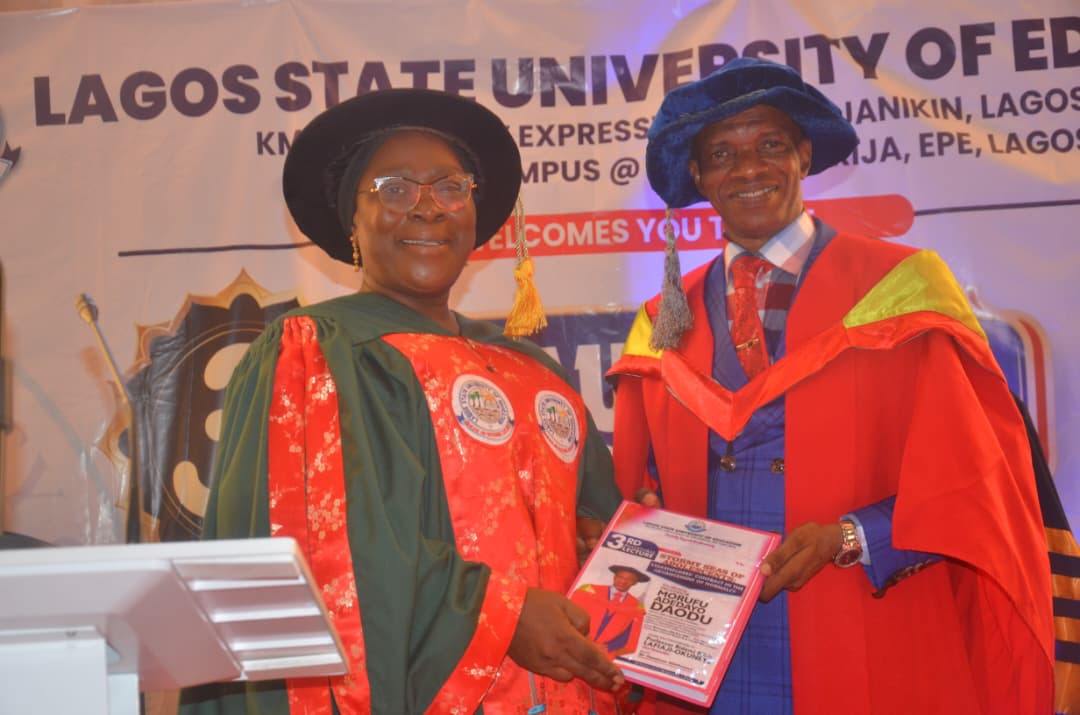
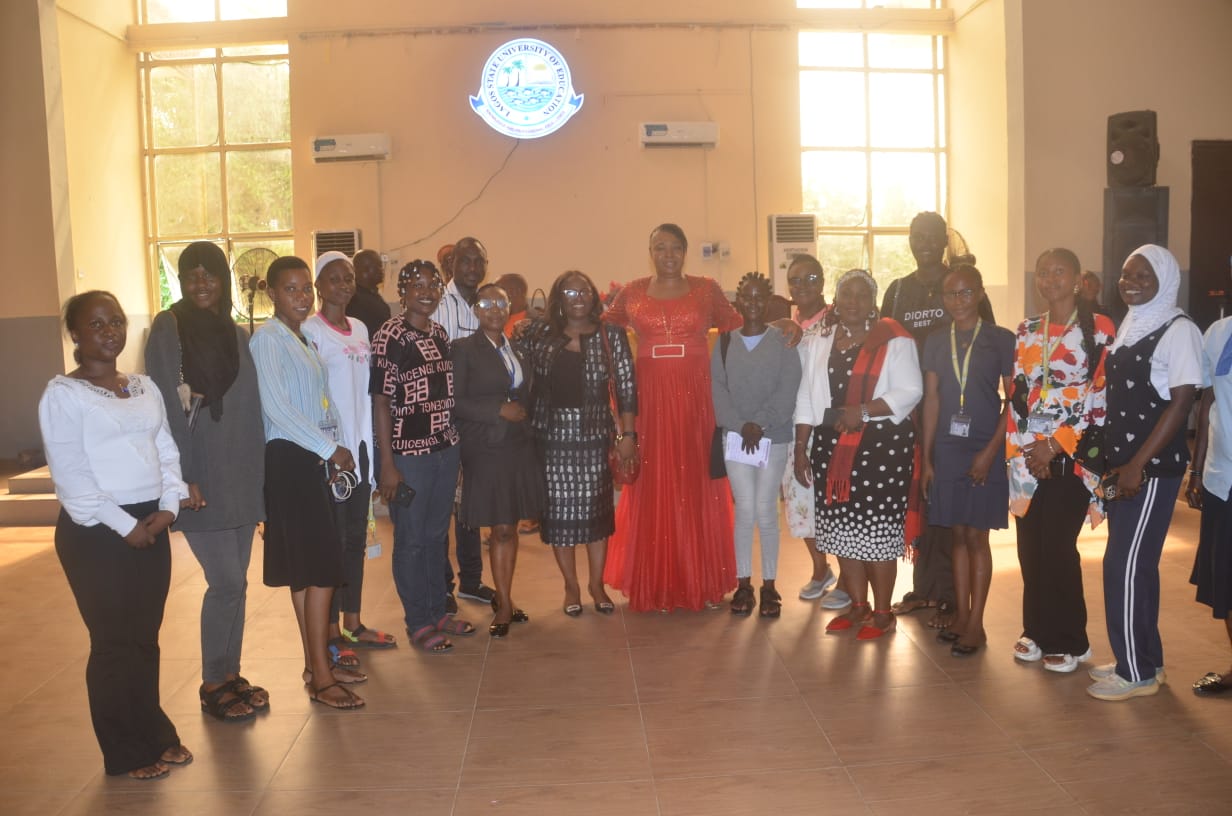
The Lagos State University of Education (LASUED) on Tuesday, 24th March, 2026, held its second inaugural lecture at the Senator Oluremi Tinubu Hall, Oto/Ijanikin main campus.
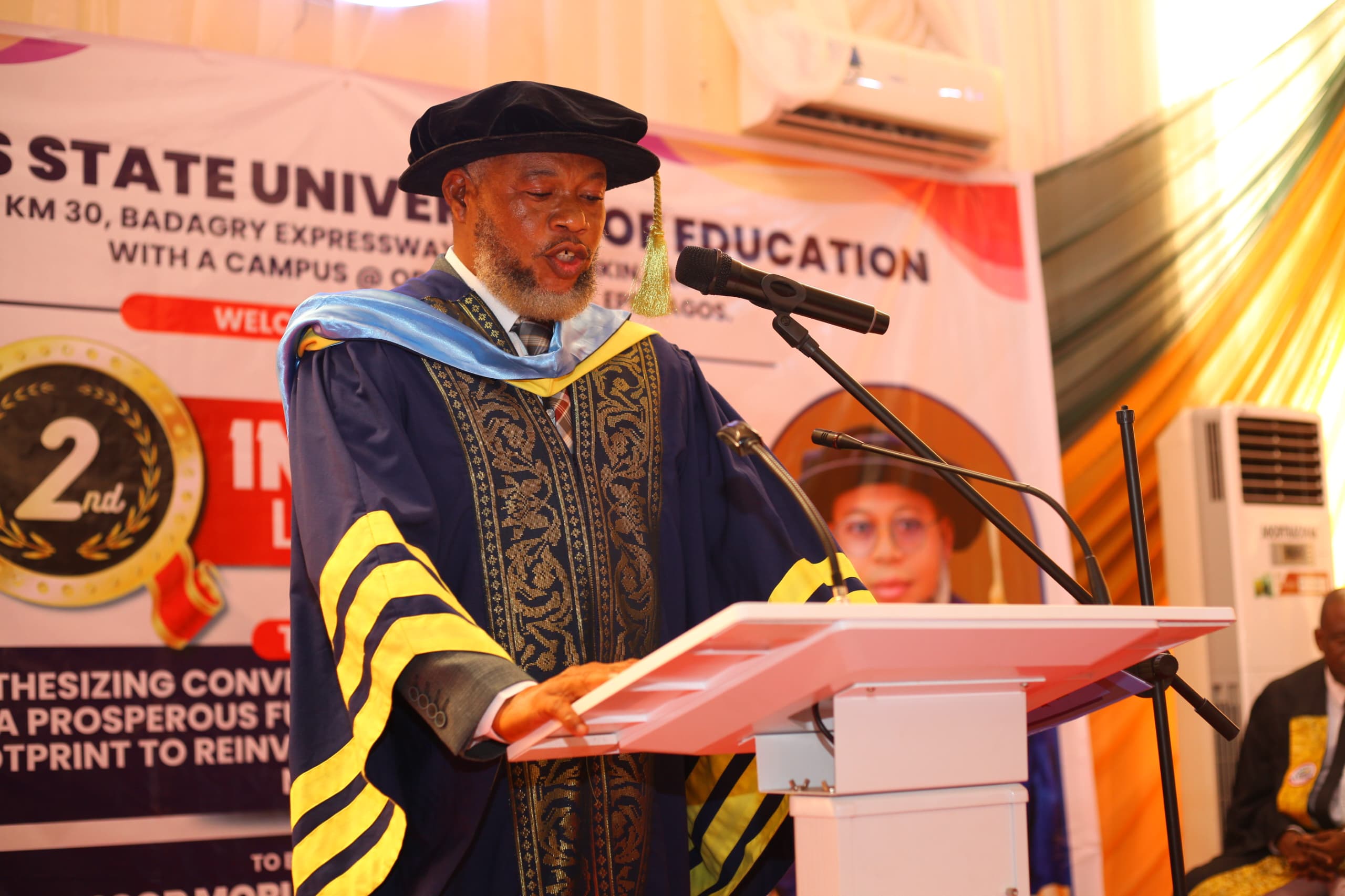
The lecture, titled “Synthesizing Convention and Modernity for a Prosperous Future: My Intellectual Footprint to Reinvigorate Arabic Studies in Nigeria,” was delivered by Professor Morufudeen Adeniyi Shittu, a Professor of Arabic Language Education in the Department of Foreign Languages (Arabic Unit), College of Languages and Communication Arts Education (COLCAED) who is also the Deputy Vice-Chancellor (Administration) of LASUED.
In her opening remarks, the Vice Chancellor, Prof. Bidemi Bilkis Lafiaji-Okuneye expressed delight at the large turnout. She noted that inaugural lectures would now become a regular feature in the university’s academic calendar to strengthen scholarly engagement.
“Attaining the rank of Professor, it is a must to inaugurate your chair to truly expand the scope of that position,” she said.
Prof. Lafiaji-Okuneye also reflected on the theme of the lecture, describing it as insightful and impactful.
She emphasized that the presentation challenged the widespread misconception that Arabic is solely a Religious Language.
“Arabic is a language, not a religion,” she clarified, citing the example of the late Professor Odunsi, a Christian who served as the first Professor of Arabic at Lagos State University (LASU).
She encouraged students and Academic Community to embrace interdisciplinary learning, noting that studying languages like Arabic enhances intellectual capacity and global understanding.
Delivering the lecture, Professor Shittu traced his journey into Arabic studies, explaining that his early interest was driven by both spiritual and intellectual curiosity aimed at accessing sacred texts, classical scholarship, and civilizational knowledge.
“I began to see Arabic not only as a language of heritage but as a language of global relevance that connects continents, economies, diplomacy, and knowledge systems,” he said.
According to him, the lecture sought to examine the historical foundations and intellectual development of Arabic studies in Nigeria, highlighting its roles in religion, culture, and administration.
He described Arabic as one of the most enduring and structurally complex languages, with significance that extends beyond its historical roots into modern-day applications, particularly in the digital age.
Prof. Shittu further noted that Arabic had long influenced the intellectual and educational landscape of West Africa, serving as a medium of instruction, religious scholarship, and legal administration before the advent of European Colonialism.
At the conclusion of the lecture, he called for reforms in Arabic education, urging that it should be expanded beyond traditional roles to incorporate modern competencies.
He stressed the need to integrate vocational, technological, entrepreneurial, agricultural, leadership, artisanal, and digital skills into Arabic studies to equip graduates for global competitiveness and align with sustainable development goals.
LASUED Hosts Second Inaugural Lecture, Advocates Modern Approach to Arabic Studies.
Media Gallery
Images 2